

Khoos Marquetry Technique

This work introduces a contemporary interpretation of khoos marquetry, where palm leaves are carefully treated and dyed using natural pigments derived from organic sources such as Indigo, Turmeric, and Hibiscus. The process emphasizes a return to material authenticity, allowing color to emerge through natural reactions rather than synthetic intervention.

Rooted in traditional craftsmanship, the technique involves cutting, composing, and assembling thin layers of dyed palm into intricate patterns. Each element is placed by hand, creating surfaces that are both precise and expressive, where subtle tonal variations reflect the organic nature of the materials.

Sustainability

Locally sourced palm fronds and biodegradable dyes minimize environmental impact. The natural pigmentation ensures each piece carries a unique, evolving character shaped by time and light.

The Value of Time

The making process is intentionally slow. From harvesting to final assembly, production can take several months, reinforcing the significance of craftsmanship in every creation.

Applications

This technique bridges heritage with contemporary design across a wide range of applications:

  • • Wall Panels
  • • Partitions
  • • Furniture Surfaces
  • • Design Objects
Blue

This piece incorporates dyed palm leaves stained with indigo powder, echoing the iconic burqa’a—a traditional women’s face covering deeply rooted in Emirati heritage. By utilizing this organic pigment, the work bridges the gap between historical identity and contemporary material expression.

Inspired by the legacy of our grandmothers, who preserved the burqa’a in UAE museums as a symbol of women’s empowerment, this work utilizes indigo-dyed fabric to represent cultural resilience and the preservation of Emirati identity.

The Mark of "Buqam"

The indigo powder leaves a distinct mark known as "Buqam." This stain represents more than just color; it symbolizes lasting memories and the profound impacts of events that shape our history.

Blue Heritage

Historically significant and visually striking, the blue hues derived from indigo serve as a visual narrative of tradition, honoring the craftsmanship of the past through modern applications.
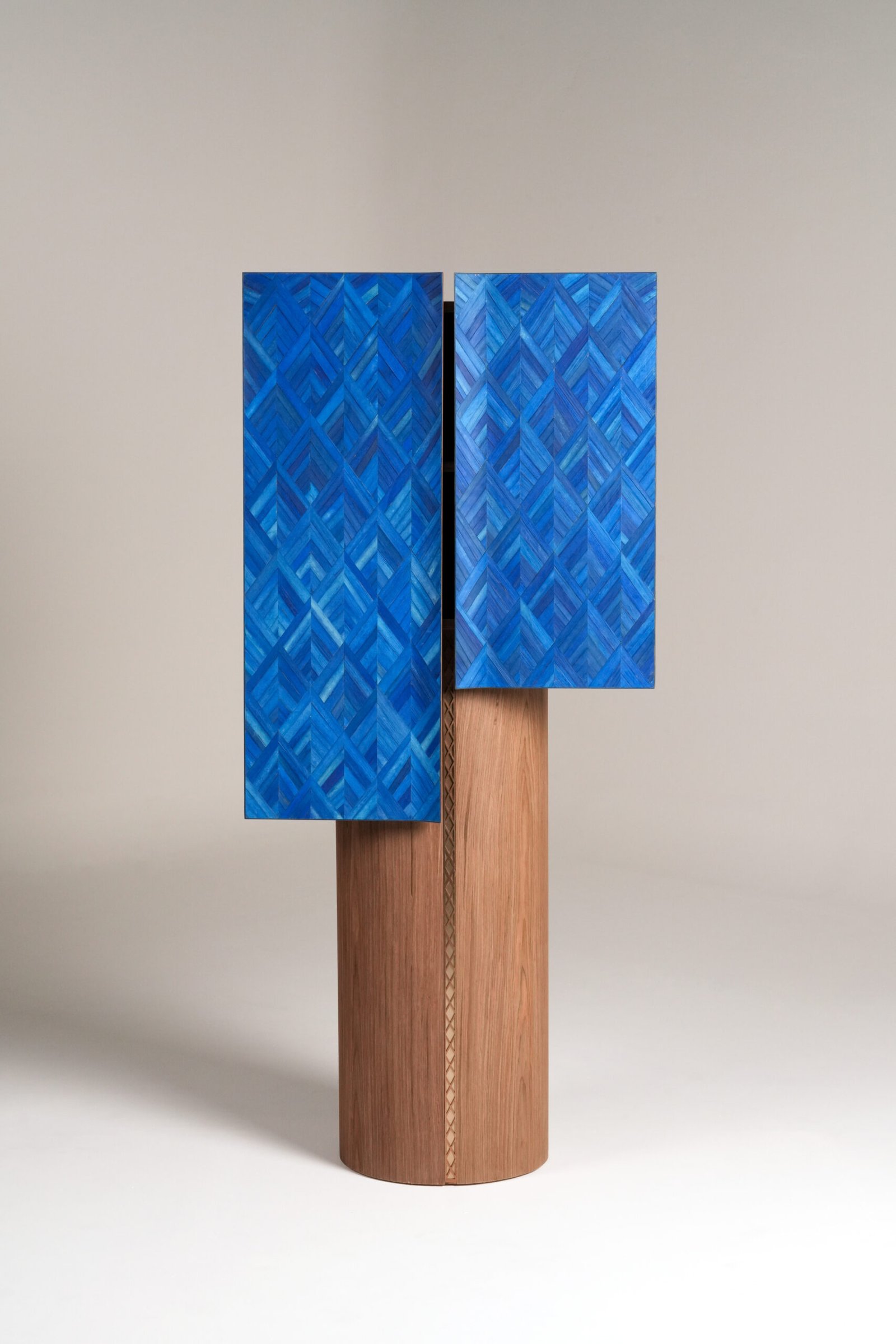

Blue Khoos Detail Indigo Pigment Illustration

The application of Kurkum (Turmeric) introduces a natural dyeing process that brings warmth, depth, and subtle variation to the material. Its organic pigmentation allows each piece to carry a unique tonal identity, reflecting the unpredictability and richness of nature.

Through marquetry, these dyed elements are carefully composed into layered patterns, transforming a humble material into a refined, tactile expression. This technique bridges past and present—preserving traditional knowledge while expanding its possibilities within a contemporary design context.

Organic Pigmentation

Unlike synthetic alternatives, turmeric interacts with the fibers of the palm to create a spectrum of golden hues, ensuring that no two elements are identical in their saturation.

Refined Expression

The process elevates the natural palm leaf through meticulous layering, resulting in a surface that is as much about the sense of touch as it is about visual warmth.


Turmeric Pigment Pattern Yellow Khoos Detail